Clinical use case

Capillaroscopy for systemic sclerosis follow-up

Follow systemic sclerosis and Raynaud patients with structured nailfold capillaroscopy and nailfold videocapillaroscopy (NVC) studies, longitudinal image organization, quantitative findings, and clear reports.

  • Organize images by patient, visit, finger, and project.
  • Review capillary density, giant capillaries, hemorrhages, tortuosities, avascular areas, morphology, and pattern suggestions.
  • Export reports for clinical documentation and longitudinal comparison.

For clinicians who need reports that are easy to compare across visits.
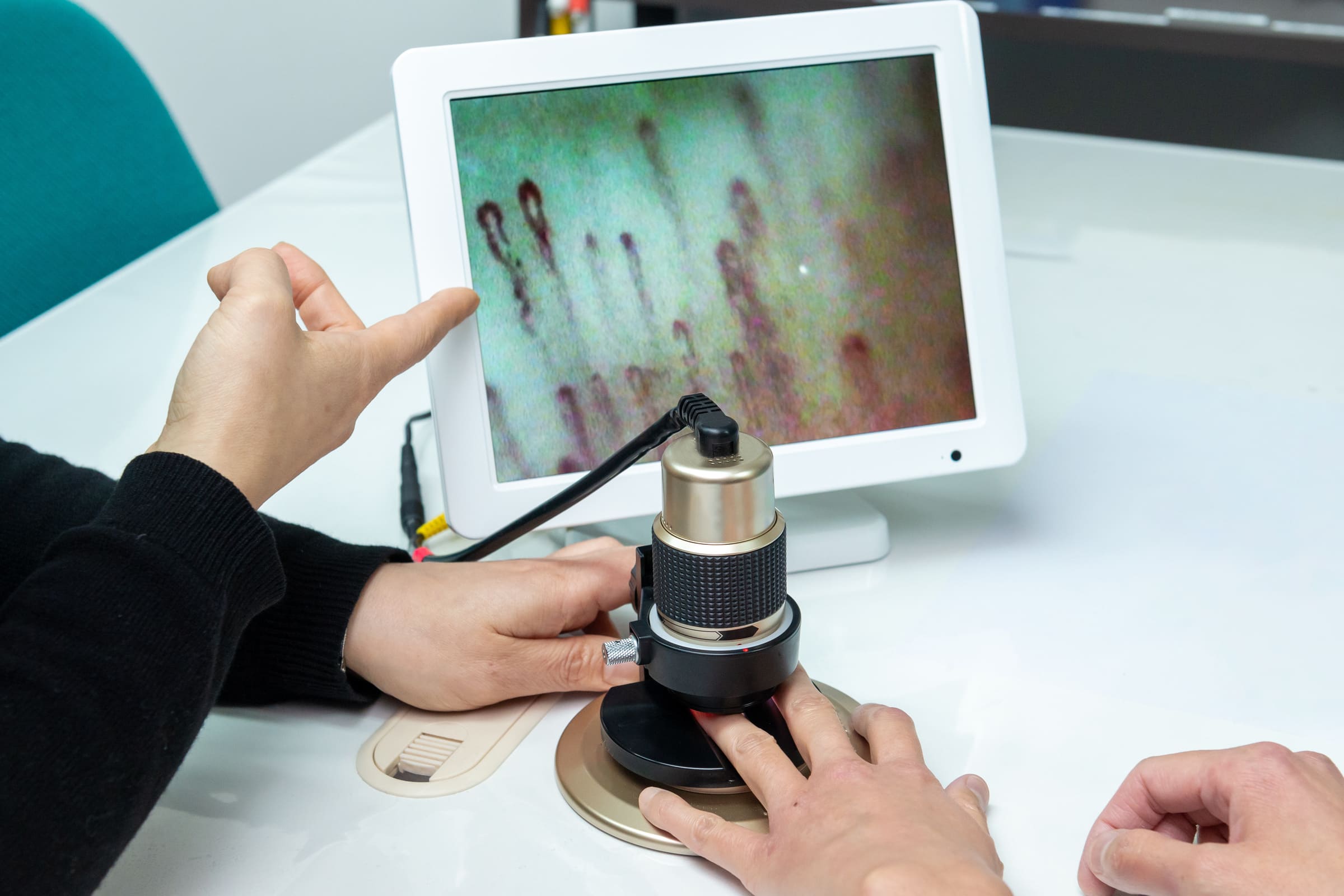
Clinical nailfold capillaroscopy follow-up for a systemic sclerosis patient
Patient series Pattern suggestion Report export Image quality review Clinical and research workspaces

Built for longitudinal capillaroscopy

Systemic sclerosis follow-up depends on structure, not just isolated images.

Compare visits

Keep previous capillaroscopies available so follow-up does not depend on searching old folders.

Structure the report

Separate raw findings, automated measurements, quantitative metrics, and pattern interpretation for clearer documentation.

Review pattern evidence

Use AI-assisted capillary density, giant capillary, hemorrhage, tortuosity, and morphology findings as a review layer while keeping the clinician in control of final interpretation.

Teach with real cases

Turn organized cases into examples for residents, fellows, and internal sessions.

Export when needed

Download reports and data for the clinical record, audit, or research reuse.

Work with your device

Use NVC images from common capillaroscopes without changing the hardware acquisition setup.
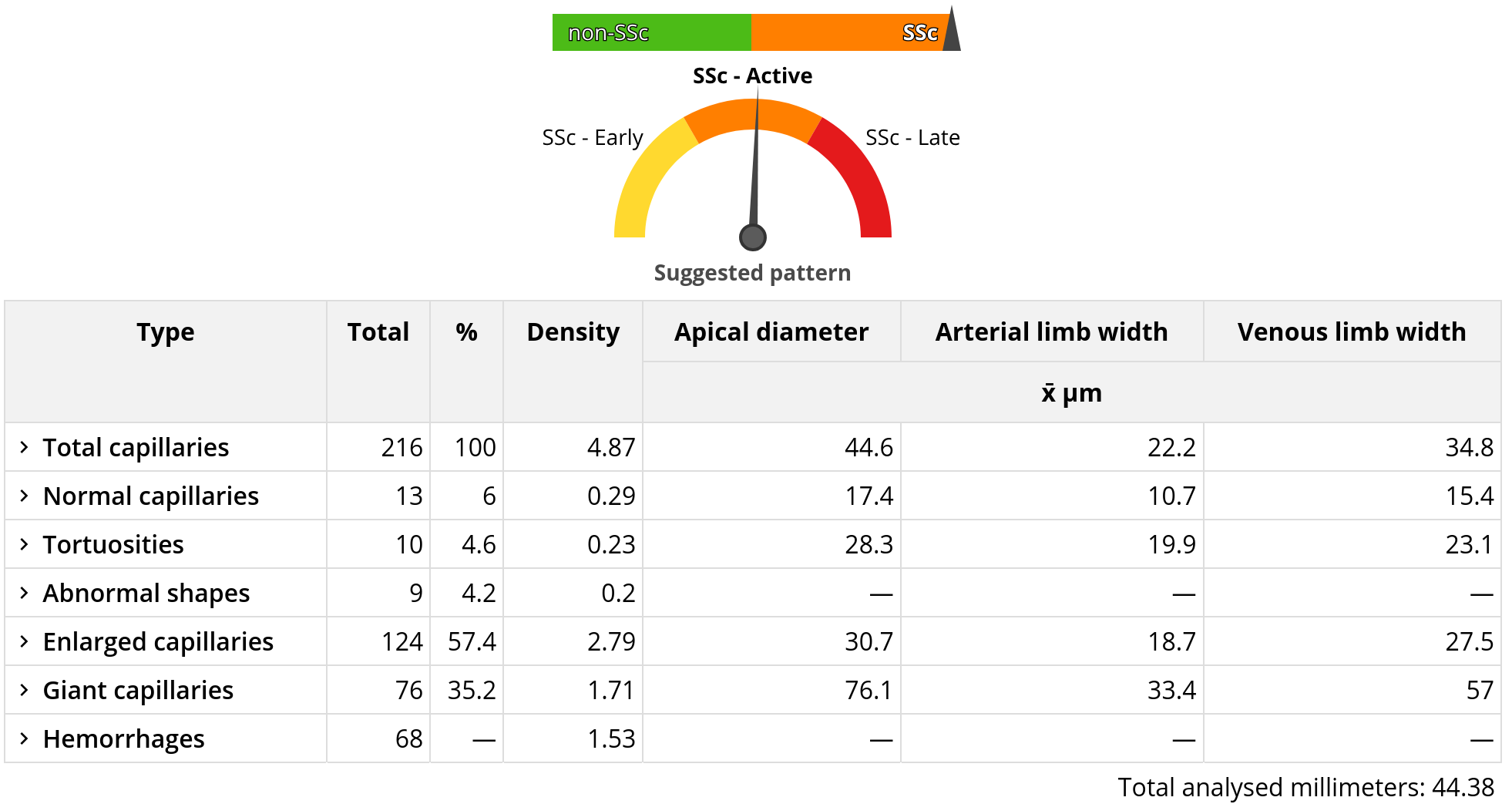
Capillary.io scleroderma pattern suggestion with capillary density, giant capillaries, hemorrhages, and morphology review

Systemic sclerosis reporting

Keep findings, images, and interpretation together

Capillary.io helps transform a visual NVC examination into a structured record with images, automated measurements, quantitative findings, and interpretation that can be reviewed, exported, and compared over time.

  • Normal, nonspecific, and scleroderma-pattern support
  • Capillary density, giant capillaries, and morphology review
  • Hemorrhage, tortuosity, and avascular area documentation
  • Follow-up-ready patient series

Systemic sclerosis examples

Compare early, active, and late SSc patterns

Use the embedded viewer to inspect complete systemic-sclerosis-pattern NVC studies with images, quantitative findings, quality review, and pattern context together.

  • See how the pattern changes across complete image sets.
  • Keep density, giant capillaries, hemorrhages, tortuosities, morphology, and image quality visible.
  • Use a unified viewer before generating a structured follow-up report.
Early SSc Cutolo pattern

Clinical follow-up

Keep every study comparable from one visit to the next.

1

Capture

Acquire images using your current capillaroscope.

2

Organize

Attach images to the patient visit and fingers.

3

Interpret

Review metrics and pattern support in context.

4

Compare

Use structured records at the next visit.

Make systemic sclerosis capillaroscopy easier to follow

Start with a free account and build a structured case from your next patient study.

Create free account